Short Practice or Long Sessions? Choose a Rhythm That Fits the Skill
Short practice or long sessions? Compare time, return effort and skill demands to choose a learning rhythm you can use consistently without forcing every task into one slot.

You have a spare quarter-hour before dinner, while Saturday offers a quiet stretch with no plans. If you are weighing short practice or long sessions, the useful question is not which format wins in general. It is what the skill asks of you, and how easily you can return to it.
1. Match the session to the shape of the skill
Some skills are made of small, repeatable actions. Learning vocabulary, practising a piano scale or sketching basic forms can fit into a brief session, because each attempt has a clear beginning and end. A short visit can still give you something specific to notice: a tricky word, an uneven note or a line that keeps going off course.
Other skills need room for their parts to connect. Drafting an essay, rehearsing a presentation or working through a complex piece of music may involve setup, several decisions and a final pass. Breaking that work into fragments can leave you repeatedly rebuilding context instead of practising the skill itself.
Think of a session as a container: a lunch tin suits a snack, not a family meal. The point is not to make the container as large as possible; it is to give the work enough room to take shape.
2. Compare available time with usable time
A calendar slot can look generous while leaving little time for the actual practice. You may need to find the right file, warm up, gather materials or remember where you stopped. When the setup is substantial, a longer session may make better use of the time you have.
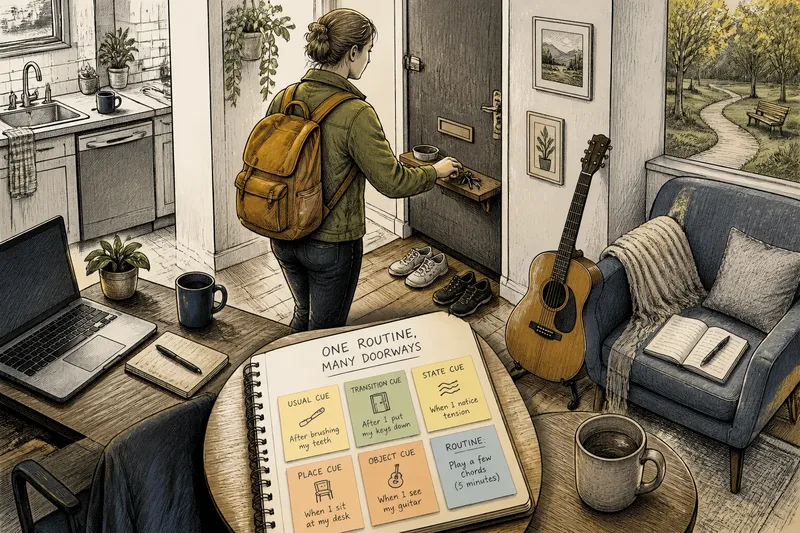
Brief practice can fit around ordinary commitments, but it works best when the task is ready to begin. Keep a language exercise open, leave your knitting beside the chair or mark the next passage in a score. A small preparation now can make a later short session feel like practice rather than a search for supplies.
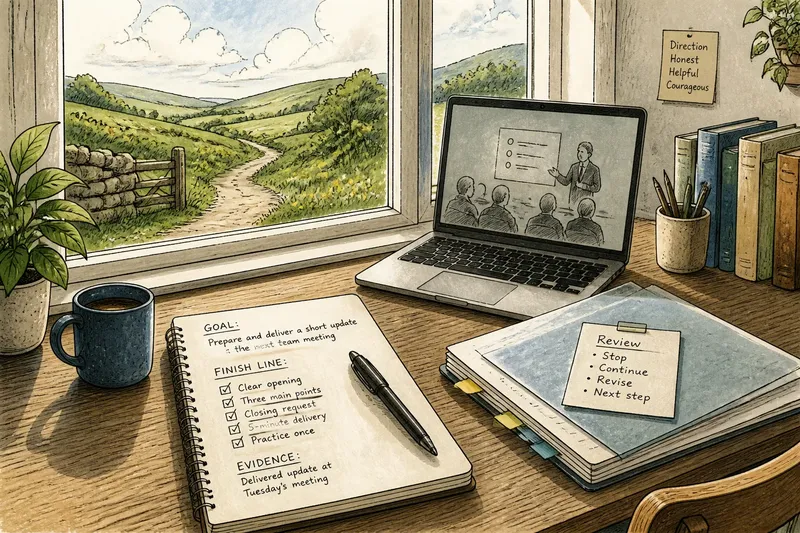
Say you want to improve a spoken presentation and have a short window before work. You could rehearse one transition aloud, note where the wording catches, and leave the next transition marked for later. The observable result is a specific section practised and a clear point to resume; the exercise does not require squeezing a full run-through into a rushed slot.
3. Count the effort of returning
Coming back to a skill has its own cost. After a long pause, you may need to recover the sequence, rebuild confidence or work out what the next move was. Frequent brief sessions can reduce that re-entry effort when the material is easy to pick up and put down.
But frequent sessions are not automatically easier. If every visit requires clearing a table, setting up equipment or settling into a demanding task, the repeated start can become the hardest part. In that case, fewer, longer sessions may feel calmer because preparation and concentration happen together.
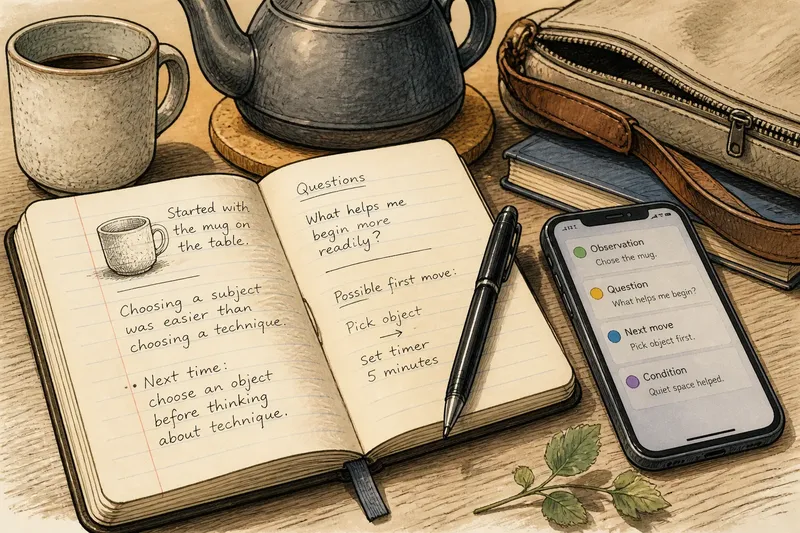
Leave yourself a useful handover. Write down the next chord to practise, the sentence that needs editing or the question you want to answer. This is not a progress diary; it is a small instruction to your future self, so returning does not begin with guesswork.
4. Let the kind of learning guide the rhythm
Skills that benefit from repeated recall often lend themselves to short, spaced encounters. Language learning is a familiar example: reviewing a few words, trying to retrieve them from memory and checking the answers can be easier to repeat than a single prolonged review. The task should still demand active recall rather than merely rereading a page.
Skills that depend on sustained flow may need a longer stretch. Writing, coding a small feature or practising a complete dance sequence can involve a chain of choices that makes more sense when kept intact. A short session can still help, but choose a self-contained section rather than stopping in the middle of a complicated passage.
Some learning needs both rhythms. You might use brief sessions for vocabulary and reserve a longer one for composing a paragraph with those words. The format follows the work: recall in small rounds, then use the material where its connections matter.
5. Which practice rhythm suits your situation?
Are short practice sessions effective for learning a skill?
They can suit skills built from clear, repeatable attempts, especially when each session includes active effort and a chance to notice what needs attention. They are less useful if most of the available time disappears into setup or if the task needs an uninterrupted run.
When should I choose a longer practice session?
Choose a longer block when the work has a slow warm-up, several connected stages or a useful result that takes time to assemble. A longer slot can also help when frequent preparation would interrupt your concentration.
Can I mix short and long practice sessions?
Yes, if each format has a distinct job. Brief sessions might keep recall active, while a longer one gives you room to combine what you have learnt; there is no need to force both kinds of work into the same rhythm.
What should I do if I keep missing planned sessions?
Look at the friction rather than treating the missed slot as a verdict on your commitment. If the task takes too long to set up, prepare the next action in advance; if it needs more concentration than your available window allows, move it to a quieter block.
6. Choose a rhythm you can adjust
Try a format for a few sessions and notice practical signs: whether you get to the main task, whether you remember where to resume, and whether the session length leaves you alert or scattered. These observations are more useful than judging a plan by how ambitious it looks on paper.
If short practice or long sessions still feels like a forced choice, give each a different role. Use the smaller window for one well-defined action, and protect a longer stretch for work that needs continuity. Your schedule can change with the skill, the week and the point you have reached.
Before you stop, make the next return easy: leave out the material, save the right file or jot down the next decision. A clear handover lets your future session begin with the skill itself, whether it lasts a few minutes or takes the afternoon.